

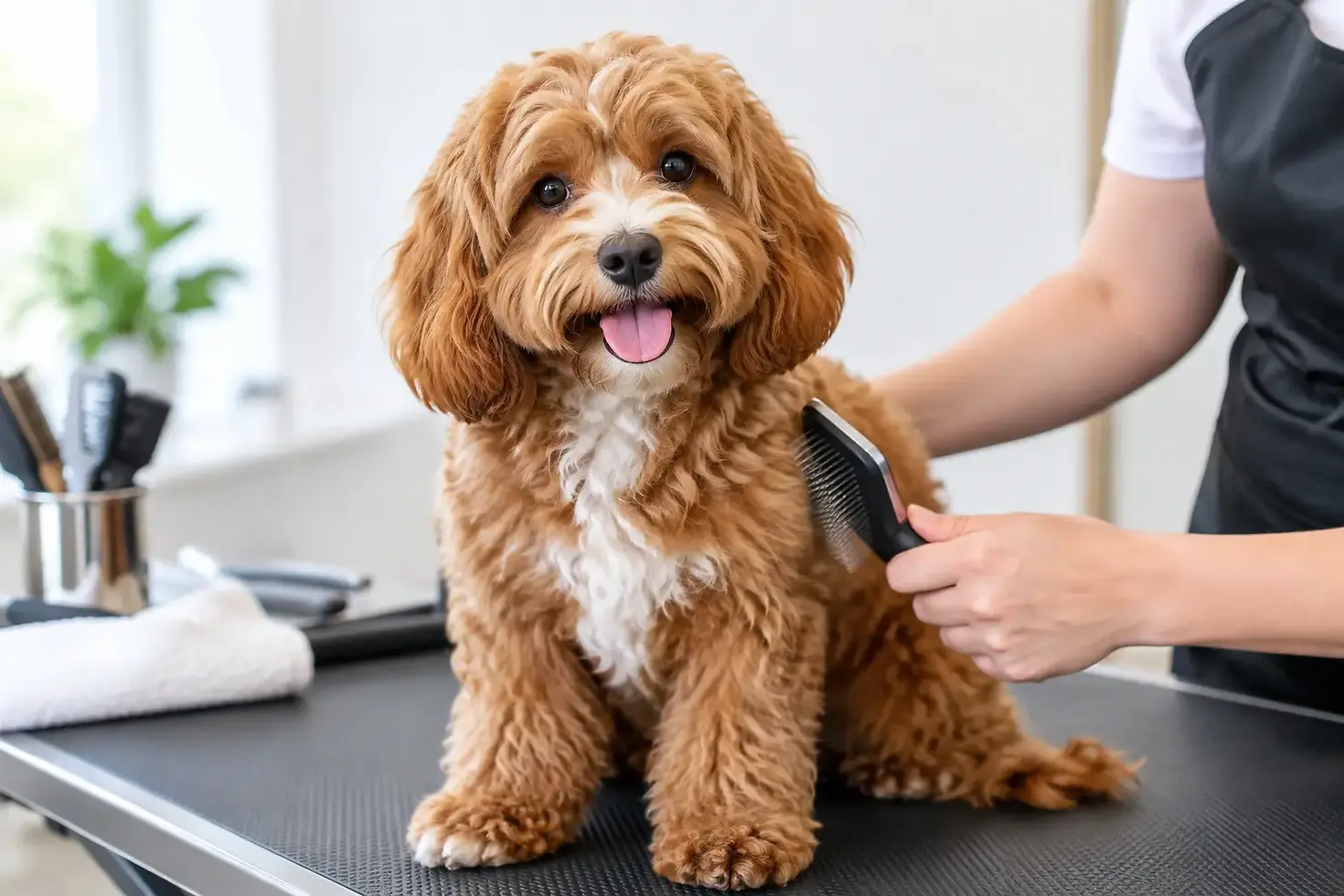
Do Cavapoos Need Professional Grooming Often?

A Cavapoo's soft, teddy-bear look is part of the joy of bringing one home. It also comes with a real commitment: that beautiful coat needs regular care to stay comfortable, clean, and free of painful mats. So, do Cavapoos need professional grooming? For most families, yes. Home brushing is essential, but professional grooming is usually the most reliable way to maintain a Cavapoo's coat, skin, nails, and overall comfort.
The good news is that grooming does not have to be stressful or complicated. When it becomes part of your puppy's normal routine early on, it can be another calm, positive part of life together - much like training, family walks, and quiet time on the couch.
Why Cavapoo Coats Need Extra Attention
Cavapoos are a cross between a Cavalier King Charles Spaniel and a Mini Poodle, and their coats can vary widely. Some puppies develop looser waves, some have curls closer to a Poodle's, and others have a softer, straighter coat. Even puppies from the same litter can mature into very different coat types.
What they often share is fine, soft hair that can tangle close to the skin. Friction from a harness, collar, bedding, playtime, or a child's affectionate hug can quickly create knots. Moisture makes the problem worse. A damp beard after drinking, wet paws after a walk, or a coat that is not fully dried after a bath can begin to mat surprisingly fast.
Mats are more than a cosmetic issue. They pull on the skin, trap moisture and debris, and may hide irritation, hot spots, ticks, or small injuries. Severe mats can make movement uncomfortable, especially behind the ears, under the front legs, around the collar area, and near the tail. Regular grooming protects your Cavapoo's comfort as much as it protects that adorable appearance.
Do Cavapoos Need Professional Grooming on a Schedule?
Most Cavapoos benefit from a professional appointment every six to eight weeks. A dog with a curlier, denser, Poodle-like coat may need grooming closer to every four to six weeks, especially if the family prefers a longer style. A Cavapoo kept in a short, easy-care trim may be comfortable going a little longer between full appointments, provided brushing is consistent at home.
The right schedule depends on the individual dog, the haircut you choose, your family's routine, and how diligent you can be with at-home coat care. A busy household does not need to feel guilty for choosing a shorter trim. In fact, a practical haircut can be a very loving choice for an active companion who enjoys muddy yards, hiking trails, snow, and plenty of family play.
Professional groomers do more than give a haircut. A quality appointment generally includes a bath and complete dry, brushing and combing, nail trimming, ear cleaning, sanitary trimming, and a close look at the skin and coat. Groomers may also notice changes that deserve a conversation with your veterinarian, such as persistent ear odor, a new lump, flaky skin, or areas of sensitivity.
For young puppies, the first visits should focus on confidence rather than a perfect haircut. A brief, gentle introduction to the sights, sounds, table, dryer, and handling involved in grooming can build trust. This is especially helpful during the early months, when puppies are learning that new experiences can be safe and manageable.
Home Care Between Grooming Visits
Professional care works best when it is paired with a simple home routine. Brushing is not optional for most Cavapoos, even when they are on a regular salon schedule. Think of it as a few quiet minutes of connection that also prevents discomfort later.
For a shorter coat, thorough brushing two or three times a week may be enough. For a longer, curlier coat, daily brushing is often the kinder choice. The goal is not to skim the surface. Use a slicker brush gently in small sections, then follow with a metal comb to make sure you can reach the skin without snagging. If the comb cannot move through the coat, there is likely a tangle forming underneath.
Pay special attention to the places mats like to hide: behind the ears, beneath the collar and harness, under the legs, across the chest, around the rear, and between the toes. Check the beard after meals and water breaks. Wiping it with a soft, damp cloth and drying it afterward can help keep it fresh.
Avoid bathing your Cavapoo without a plan to brush and fully dry the coat afterward. Water can tighten existing tangles, turning a small knot into a difficult mat. If your dog gets muddy between appointments, a paw rinse or spot clean may be all that is needed. When a full bath is necessary, use dog-safe products and dry carefully, working through the coat in sections.
Nails deserve attention, too. Long nails can affect a dog's footing and gait, particularly on hard floors. If you hear clicking as your Cavapoo walks through the house, it may be time for a trim. Some families prefer to leave nail care to the groomer or veterinarian, while others learn to do small, frequent trims at home. Either approach can work when your dog is comfortable and the nails are maintained consistently.
Choosing a Haircut That Fits Your Family
There is no single correct Cavapoo haircut. The best style is the one that keeps your dog comfortable and fits your ability to maintain it.
A longer, fluffy teddy-bear trim can be charming, but it asks more of the family between appointments. It needs frequent brushing, regular combing, and careful attention after wet weather or outdoor play. A shorter puppy cut is often easier to manage and can still leave your Cavapoo looking soft and sweet. Some families choose to keep the body short while leaving the face and ears a little fuller for that classic Cavapoo expression.
Be honest with your groomer about your routine. Let them know whether your Cavapoo wears a harness daily, spends lots of time outdoors, visits dog parks, swims, or shares a home with young children. Clear communication helps them recommend a length and schedule that support your real life, not an idealized grooming routine that becomes difficult to sustain.
If a coat has become badly matted, a groomer may need to shave it short rather than attempt painful brushing. That can be disappointing, especially if you love a fluffy look, but it is often the most humane option. Hair grows back. Comfort should come first.
Building Grooming Confidence From Puppyhood
A well-prepared puppy can still need gentle practice with grooming at home. Start with very short sessions. Touch paws, lift ears, look between toes, softly brush one small area, and offer calm praise. Keep your voice relaxed and end before your puppy becomes overwhelmed.
It helps to introduce the tools gradually. Let your puppy sniff the brush and comb. Practice standing on a non-slip surface. Briefly run a nail trimmer or dryer nearby without using it, then reward calm behavior. These small experiences teach your Cavapoo that handling is ordinary, predictable, and safe.
At Freckle Paw Family, we care deeply about preparing puppies for the everyday experiences that shape family life. Early handling, in-home exposure, and thoughtful developmental foundations can support a smoother transition, but continued kind practice in the new home is what turns those beginnings into lasting confidence.
When to Call the Groomer Sooner
Do not wait for the next scheduled appointment if you find tight mats, a strong ear odor, redness, repeated scratching, a sudden change in coat texture, or debris tangled around the rear. A groomer may be able to help with the coat concern, while a veterinarian should assess symptoms that suggest pain, infection, parasites, or skin disease.
Likewise, if grooming has become a struggle, ask for help early. A patient groomer, shorter appointments, a simpler haircut, or additional handling practice at home can make a meaningful difference. For a sensitive dog, forcing a long, stressful session can create more anxiety than it solves.
Your Cavapoo does not need a show-dog finish to be well cared for. What they need is a coat that can move freely, skin that can breathe, nails that support comfortable steps, and grooming experiences built on patience. A consistent partnership between your family and a trusted professional groomer is one more gentle way to help your companion feel happy, healthy, and fully at home.


Comments