

Cavapoo Puppies Idaho Families Can Feel Good About
- Natali Higham

- 1 day ago
- 5 min read
A Cavapoo’s first weeks shape far more than the photos families fall in love with. They influence how a puppy responds to a child’s laughter, a new visitor at the door, a car ride, a grooming appointment, and the everyday rhythm of home. For families searching for cavapoo puppies Idaho, that early foundation deserves as much attention as a puppy’s soft coat and sweet expression.
A Cavapoo can be a wonderfully affectionate, people-focused companion, but no two puppies are identical. Thoughtful breeding, careful raising, and an honest conversation about your household help create the best possible match. Bringing home a puppy should feel exciting, but it should also feel considered, supported, and right for the life you share.
What Makes Cavapoo Puppies a Family Favorite?
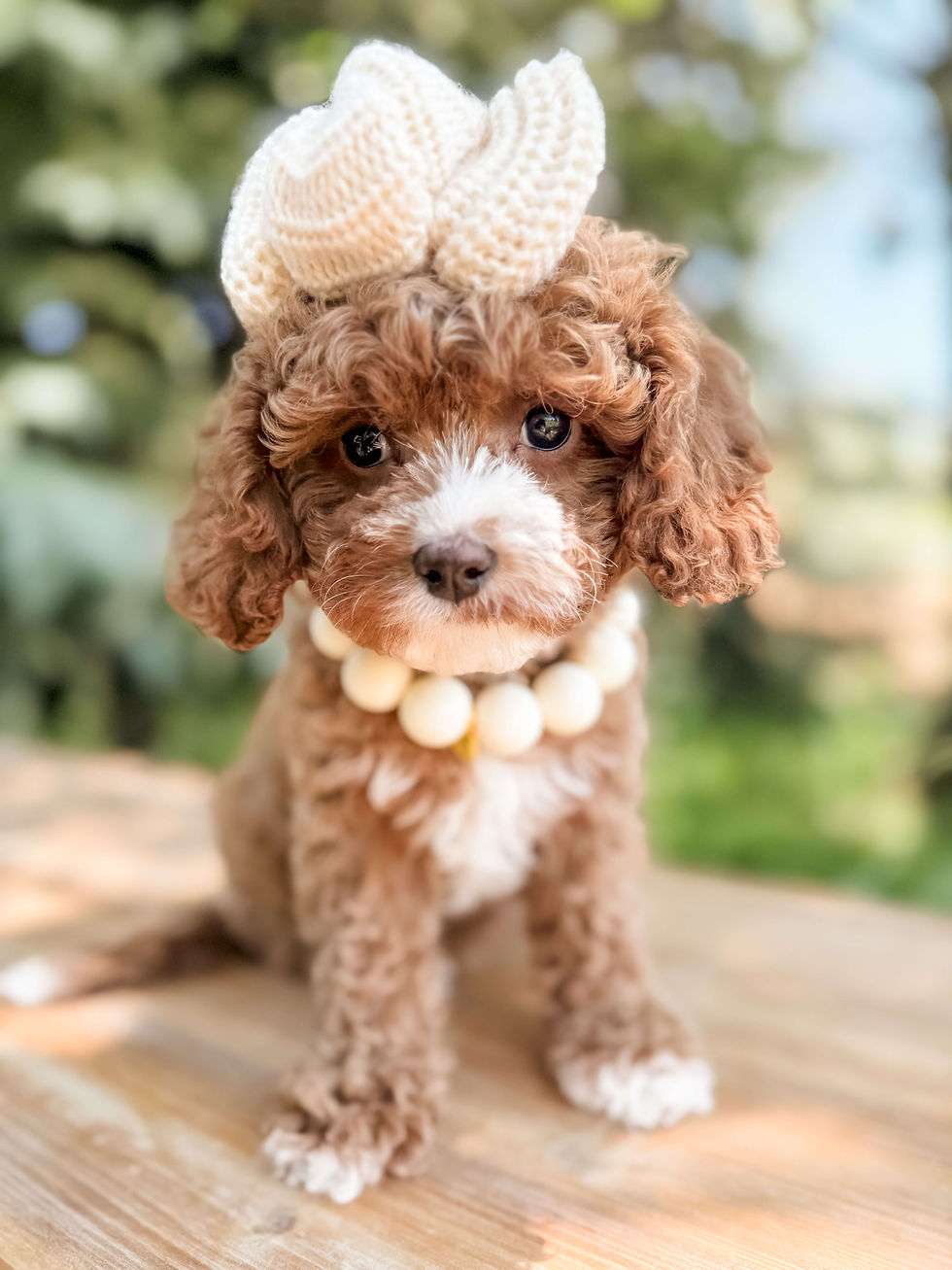
Cavapoos are a cross between a Cavalier King Charles Spaniel and a Poodle. Families are often drawn to their gentle nature, expressive faces, and desire to stay close to their people. Many inherit a playful, eager-to-please personality that fits beautifully into homes with children, couples beginning life together, or individuals looking for a devoted companion.
Their size can also make them appealing for many Idaho households. A well-bred Cavapoo may be comfortable joining family adventures, relaxing beside you after a busy day, and adapting to life in a house, townhome, or apartment with appropriate exercise and attention. Still, “adaptable” does not mean a puppy can simply be dropped into any routine without guidance. These are social dogs that thrive on companionship, kind structure, and daily engagement.
Coat type, adult size, and energy level can vary because Cavapoos are a crossbreed. Some puppies may have a looser, wavy coat, while others have a curlier coat that needs more frequent grooming. No dog is completely non-shedding or hypoallergenic, so families with allergies should spend time around dogs and discuss realistic expectations before making a commitment.
The Difference Begins Before a Puppy Is Born
A responsible puppy journey starts long before a litter arrives. It begins with intentional parent selection, attention to conformation and physical health, and a clear focus on stable, affectionate temperaments. A breeder should be able to explain why a particular pairing was planned and how the parents’ qualities support the long-term well-being of the puppies.
Health is not a single promise or a quick checkbox. It is an ongoing commitment to making careful breeding decisions, using appropriate health information, watching each dog closely, and placing puppies in homes prepared to continue good care. Longevity, sound structure, and emotional resilience all matter because a family companion should be ready for more than puppyhood.
Temperament matters just as deeply. A puppy’s genetics provide a starting point, but early experiences help shape how that puppy meets the world. Puppies raised in a busy, loving home can begin learning that ordinary household sounds, gentle handling, and daily activity are safe parts of life. This does not mean they will never be startled or uncertain. It means they have been introduced to new experiences with patience rather than left to figure everything out alone.
How Cavapoo Puppies in Idaho Can Be Prepared for Home Life
The earliest developmental window moves quickly. Purposeful programs such as Early Neurological Stimulation, often called ENS, and Puppy Culture-inspired practices give puppies age-appropriate opportunities to build confidence. These methods are not shortcuts or guarantees. They are intentional tools that support healthy development when paired with attentive care and a calm, clean home environment.
Early handling helps puppies become comfortable with the gentle touch they will experience throughout life, from brushing and nail trims to veterinary exams. Age-appropriate exposure to new surfaces, sounds, toys, and routines can help them approach change with curiosity. Continual human interaction teaches a puppy that people are a source of safety, guidance, and affection.
Early training also creates a meaningful bridge to family life. A puppy who has begun learning simple routines, handling skills, and appropriate ways to engage with people is not “finished” when they go home. Rather, the family has a stronger place to begin. Consistency after pickup is what turns those early lessons into dependable habits.
At Freckle Paw Family, puppies are raised in-home with love, attention, structured early socialization, and preparation for the real routines families share. The goal is not to raise puppies for a transaction. It is to give each one a thoughtful start and help families feel supported as they welcome a new companion.
Choosing the Right Puppy for Your Household
The best puppy is not always the one who first catches your eye. Sometimes a family with young children may be better matched with a puppy who is especially steady and people-oriented. An active couple may enjoy a puppy with more enthusiasm for play and outings. A quieter household may appreciate a puppy who settles easily and enjoys close companionship.
A good breeder gets to know both the puppies and the families. That is why an application process can be a positive part of finding your puppy, not an obstacle. Questions about work schedules, children, other pets, previous dog experience, and daily routines help guide a placement that considers the puppy’s needs alongside your hopes.
It also helps to think beyond the first week at home. Who will handle morning potty breaks? Is everyone prepared for chewing, barking, accidents, and interrupted sleep? Does your budget include quality food, routine veterinary care, training, grooming, and unexpected expenses? Puppies bring joy quickly, but they also require time, patience, and a shared plan.
Questions Worth Asking a Cavapoo Breeder
When considering cavapoo puppies Idaho families should feel comfortable asking direct questions. A caring breeder welcomes respectful conversation because informed families are better prepared for the commitment ahead.
Ask how the parent dogs were selected and what health considerations guide the breeding program. Ask where the puppies are raised, what early socialization they receive, and how they are introduced to grooming and handling. Ask what support is available after your puppy comes home, because thoughtful guidance can be especially valuable during the first months of training and adjustment.
It is also reasonable to ask about the puppy’s expected coat care, activity needs, and temperament. Be cautious of anyone who guarantees a specific adult personality, a completely allergy-friendly dog, or a puppy that will never need training. Honest guidance leaves room for each puppy to grow into an individual while helping you prepare for likely needs.
Planned litters are another sign of intention. There may be times when the right puppy is not immediately available, and waiting can be difficult when your family is ready. Yet a wait for a carefully planned litter can be worthwhile when it means the breeder has time to focus on parent dogs, newborn care, developmental milestones, and matching puppies with the right homes.
Bringing Your Puppy Home With Confidence
The transition home is a major event for a young puppy. Even a well-socialized puppy needs time to adjust to a new environment, new voices, new smells, and a new schedule. Keep the first few days calm. Offer a predictable routine for meals, potty trips, naps, and bedtime. Give children clear guidance on gentle handling and make sure the puppy has a quiet place to rest.
Socialization should continue carefully after homecoming. Introduce new people, places, sounds, and experiences in a positive, age-appropriate way. Avoid overwhelming your puppy with a packed calendar of outings. Confidence grows when a puppy can explore, recover, and learn that their family is there to guide them.
Training is one of the clearest ways to build trust. Reward the behaviors you want to see, such as coming when called, settling on a mat, and choosing a toy instead of a shoe. Short, cheerful practice sessions work better than long corrections. If challenges arise, seek qualified, positive support early rather than waiting for frustration to grow.
A Cavapoo puppy may arrive with a tiny collar, a curious nose, and a great deal to learn. What they need most is not perfection from day one. They need a prepared family willing to offer patience, consistency, and a safe place to become the companion they were meant to be.

Comments